What This Article Solves
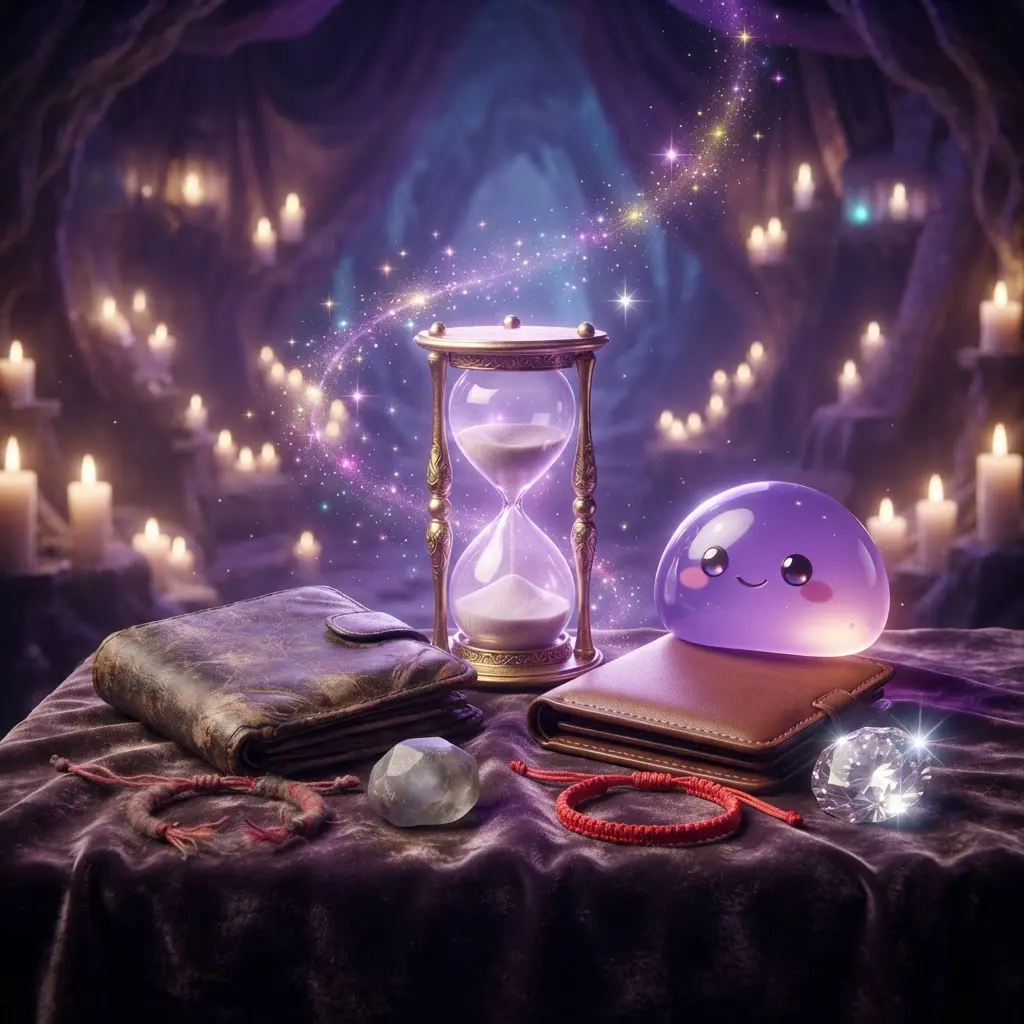
You probably have a few lucky items on you or at home: a wallet you've used for three years, a crystal in a drawer, an omamori (Omamori, 御守, a Japanese protective charm) you got last year, a talisman (Fu-Zhou, 符咒, a paper charm) stuck behind your door, a red string (Hong-Sheng, 紅繩) tied around your wrist. The question is: how long should you use them? When is it time to let them go? This article makes the "timing" and the "signals" clear. It's for you if you have lucky items but aren't sure when to replace them.
Why Lucky Items Need Replacing
Lucky items aren't things you only replace when they break. Their role is more like an object that reminds you to maintain a certain state of mind. The longer you use one, the more wear it collects, and your focus on it and respect for it slowly fade. Some materials (like paper, string, and cloth) naturally age on their own. When something is damaged, faded, or you've simply stopped noticing it, the psychological support it gives you drops. Replacing it is really a chance to reset your intention.
What You'll Need to Prepare
- A quiet, uninterrupted moment (ten minutes is enough)
- A clean cloth for wiping or wrapping
- A pen and paper to note the date of replacement
- The new lucky item (if you've already decided to replace it)
- For an omamori or talisman, first check whether the original temple or shrine will take it back
Recommended Cycle and Replacement Signs for Each Type
Wallet
- Recommended cycle: about one to three years. Replace it when the leather is worn, the lining is damaged, or the zipper jams.
- Signs it's time: it clearly looks old, you don't even want to take it out, or you often feel it's messy and hard to keep organized.
- A small note: a new wallet doesn't have to be expensive. What matters is that it's clean, durable, and something you're willing to take good care of.
Crystal
- Recommended cycle: a crystal itself doesn't need regular "replacing," but it does need regular cleansing, roughly once every one to two weeks.
- Signs it's time: it develops cracks, chipped corners, an obviously cloudy color, or it accidentally breaks.
- How to cleanse: rinse it under clean water and let it air dry, or set it in a cool, ventilated spot overnight. Avoid long exposure to direct sunlight, which can cause fading.
Omamori
- Recommended cycle: most follow a one-year principle, usually renewed around the same time the following year.
- Signs it's time: the cloth is damaged, the string has come loose, or the wish you originally made has been fulfilled.
- The right way to do it: don't casually throw away an old omamori. Bring it back to the temple or shrine where you got it and let the staff handle it.
Talisman
- Recommended cycle: generally limited to one year. Some have a clearly stated period of use, so follow the guidance of whoever issued it.
- Signs it's time: the paper has yellowed, it's damaged, the writing is faded, or its period of use has passed.
- The right way to do it: don't tear it up and toss it in the trash yourself. Bring it back to where you got it, or handle it properly according to the issuer's instructions.
Red String
- Recommended cycle: about six months to a year, or replace it as soon as it breaks.
- Signs it's time: it breaks on its own, fades badly, or picks up stains that won't wash out.
- A small note: in folk belief, a red string breaking on its own is often seen as "warding off something on your behalf." There's no need to panic. Just put on a new one.
A General Rule for Replacing
If you're unsure whether something should be replaced, remember three points to check:
- Is it already damaged, faded, or clearly aged?
- Has the thing you originally asked it for been completed, or is it no longer needed?
- When you pick it up, do you still feel the same care you had at the start?
If two of these three questions lean toward "it's time to let it go," you can replace it with peace of mind.
Things to Watch For and Common Mistakes
- Don't fall for the idea that "the older, the more powerful." An overly worn lucky item actually distracts you and loses its original reminding function.
- Don't casually throw away an omamori or talisman. This is basic respect, and it also puts your own mind at ease.
- Before switching to a new one, take a moment to thank the old item. This isn't just a formality. It helps you properly close out a chapter.
- Don't anxiously replace things too often out of fear that "not replacing it will bring bad luck." Lucky items are a support. The real key is still your actions and your mindset.
- After replacing something, note the date. Next time you won't have to guess by feel.
A Final Word
The meaning of a lucky item is to remind you to maintain a good state, not to carry everything for you. Check in regularly, replace what needs replacing, and keep every item clean, clear, and valued by you. That care is where its real effect comes from.