Divination
One question, five classical systems — pick the one that fits what you need to know.
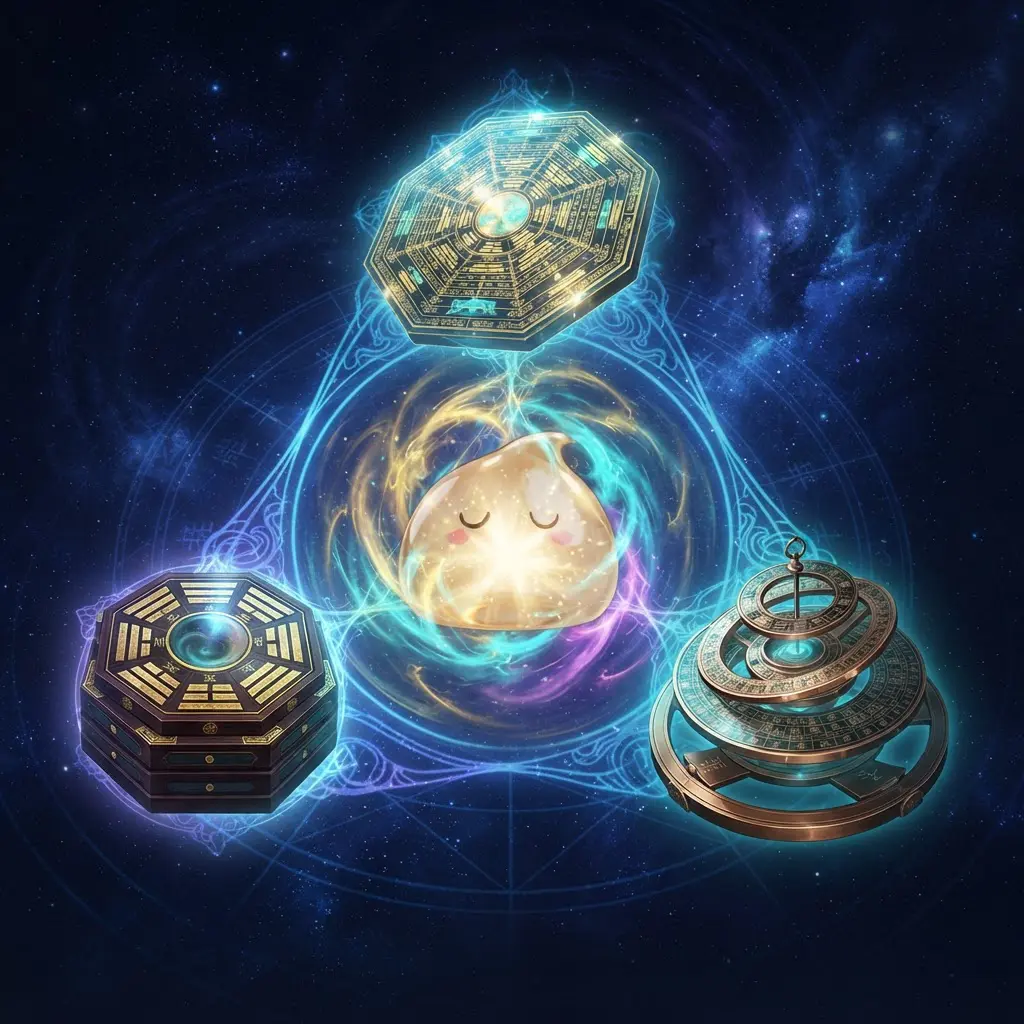
Trinity Oracle
Three charts cross-checked, one verdict
One question cast in Da Liu Ren, Qimen Dunjia and the I Ching at once, then cross-checked into a single verdict. Where the three agree is where you can act with confidence.
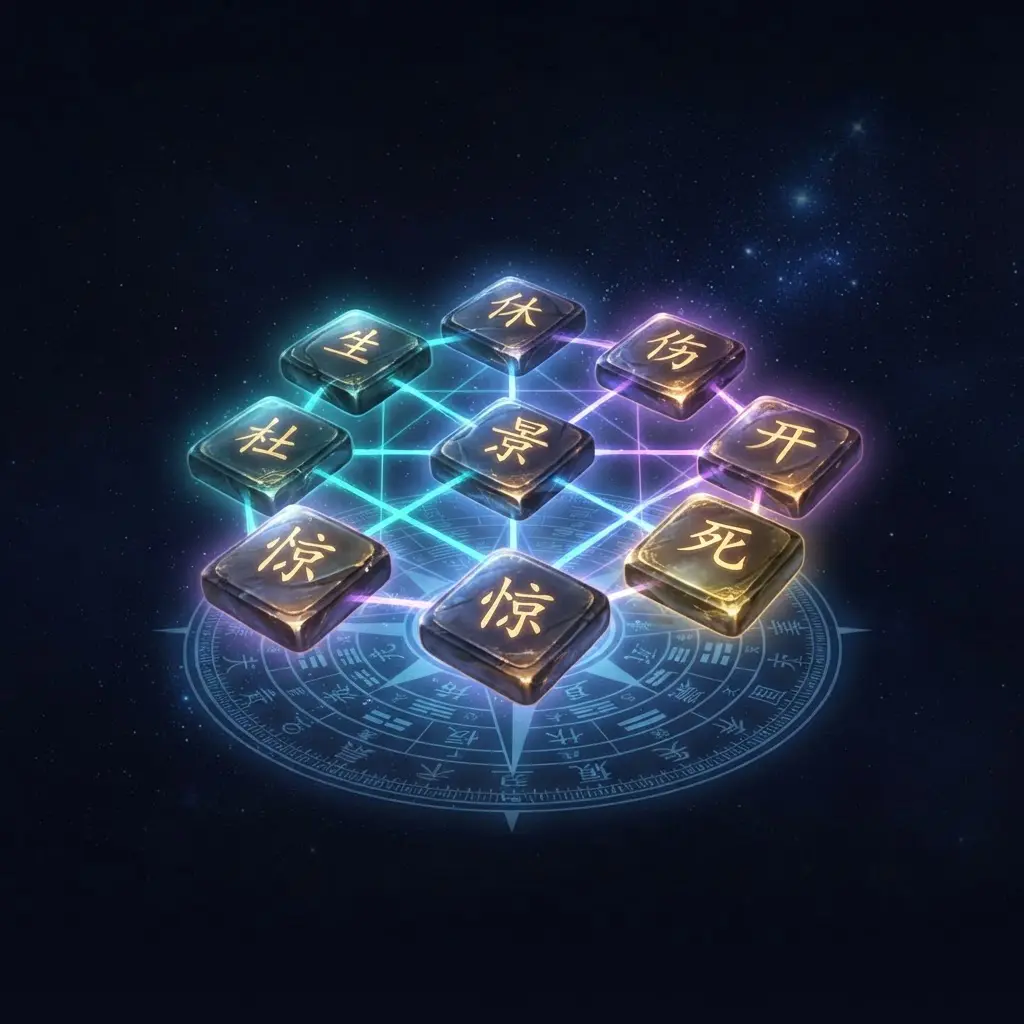
Qimen Oracle
Nine-palace chart, your best move
Casts a nine-palace chart for the exact moment you ask and tells you the best move: which direction, which person and which window of time works in your favour — and what is quietly working against you.
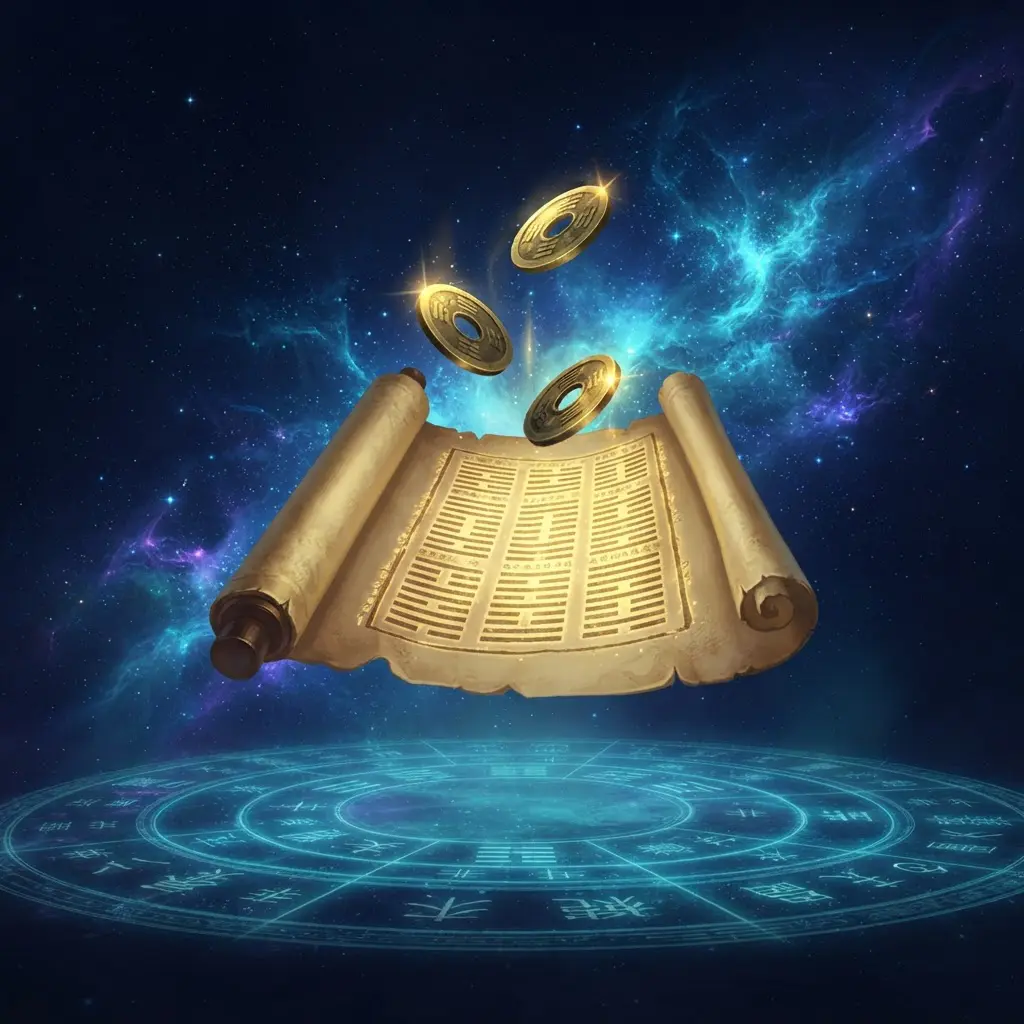
I Ching Oracle
Cast a hexagram — wisdom and where it turns
Cast by coin toss or Plum Blossom. Read through the 64 hexagrams to see the nature of the situation, your mindset and where it is turning — not just a flat yes or no.
Timeline Oracle
Three stages — past, present, what comes next
Splits a matter into how it began, where it stands now and how it ends, so you can see the whole arc and its timing. Best for concrete, short-horizon questions: a reply, a deal, a missing thing, a meeting.
Tarot Reading
Draw and read — single card free
A single draw with its classic meaning is free. Pay only for a three-card or Celtic Cross spread, or a written reading tied to your question.
Choosing a divination method
Which divination method should I use?
Match the method to the kind of question: Qimen Dunjia for strategy, timing and direction, I Ching for understanding how a situation will develop, Da Liu Ren for a fast yes/no on a single decision, and tarot for the feelings and people involved. If the question matters enough that you want it cross-checked, the Trinity Oracle reads it through three classical systems at once.
What is the difference between Qimen Dunjia and the I Ching?
Qimen Dunjia tells you what to do, while the I Ching tells you what is happening. Qimen maps your situation onto a nine-palace chart of gates, stars and deities and produces concrete guidance on timing and direction; the I Ching gives you a hexagram and changing lines that describe the shape and movement of the situation itself.
Which method is best for a yes or no answer?
Da Liu Ren is the method built for yes/no decisions. Its four courses and three transmissions resolve quickly into a clear direction, likely outcome and timing, which is why it is traditionally used for urgent choices rather than long-term life analysis.
Is divination the same as reading my birth chart?
No — divination answers a question you ask now, while a birth chart describes the pattern you were born with. Divination methods such as Qimen, I Ching, Da Liu Ren and tarot are cast at the moment of asking and speak only to that question; BaZi, Zi Wei Dou Shu and astrology come from your birth data and stay the same for life.
How should I phrase a divination question?
Ask one specific, open question about your own situation and choices. "What should I understand about taking this job?" gives the chart room to answer usefully, while a vague or multi-part question forces the reading to split its attention and answer none of it clearly.
Do I need my birth details for divination?
Most divination methods only need your question and the moment you ask it, not your birth data. Tarot, I Ching, Qimen and Da Liu Ren are cast on the time of asking; your birth chart is optional context that lets the reading be tailored to you.