What Is a Bujeok
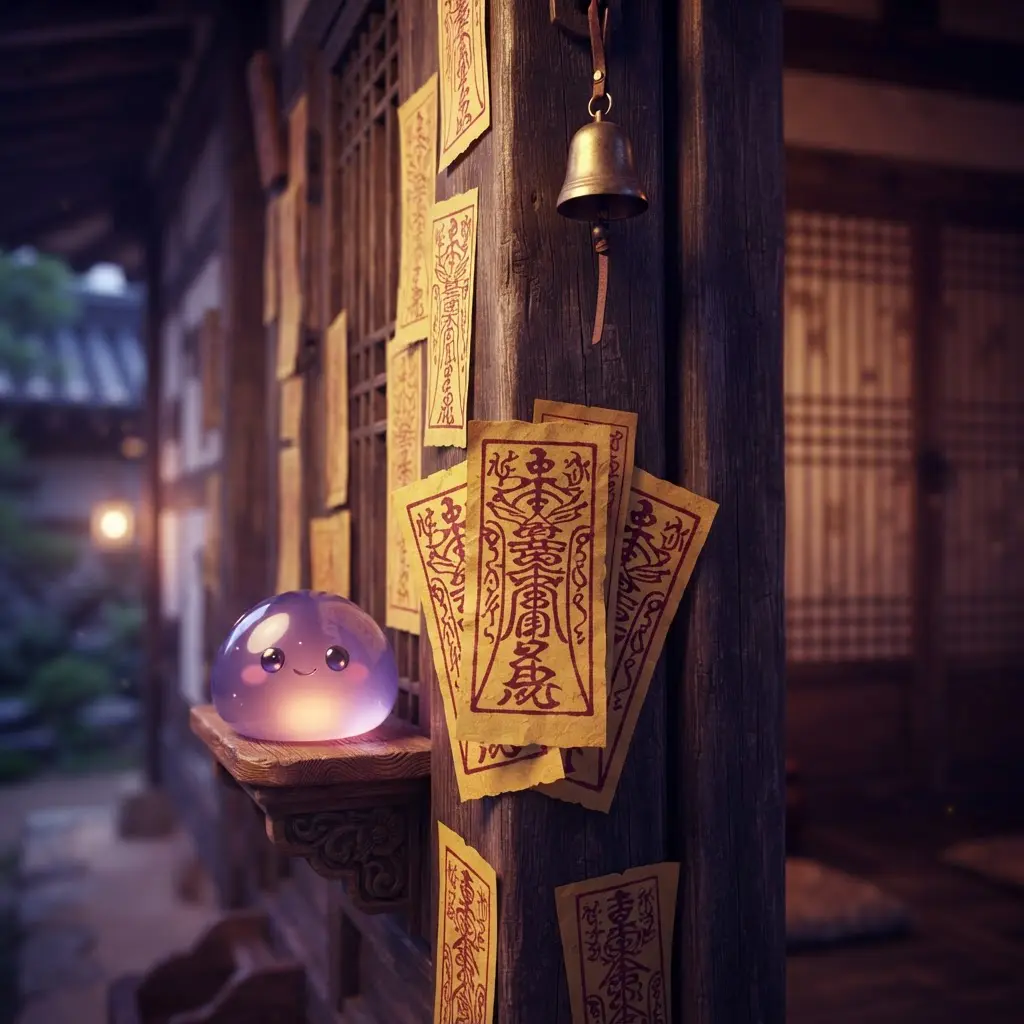
A bujeok (부적, Bujeok) is a traditional Korean protective and luck-bringing talisman. It is usually written on yellow paper, with the symbols and figures drawn in cinnabar (경면주사, Gyeongmyeonjusa), and is used to pray for wealth, safety, love, or success in exams, as well as to ward off evil and bad energy.
If you are facing a specific wish, or you simply want some peace of mind during a turning point in life, a bujeok is a choice that sits close to Korean folk belief. It does not guarantee an outcome. Instead, it places your request onto a talisman that has been written and blessed, reminding you to keep moving toward your goal.
Cultural Background
The bujeok has roots in Taoism and in musok (무속, Musok), and later blended in elements of Buddhism. Traditionally it was written and blessed by hand by monks, ritual masters, or a mudang (무당, Mudang).
There is one important idea here: what truly matters is "the sincerity of your request" and correct placement, not the paper itself. The talisman is only the medium that carries your wish. The state of mind you bring when you ask for it, and how respectfully you treat it afterward, are the parts that tradition actually cares about.
Common Types and the Wishes They Match
First get clear about which matter you want to work on, then match it to the types below.
- jaemulbu: for wealth luck and smooth business.
- sowonseongchwibu: broadly for the fulfillment of any wish.
- inyeonbu / aejeongbu: for finding a good match and harmonious relationships.
- hapgyeokbu: for success in exams, interviews, and job hunting.
- gajeongpyeonganbu: for family harmony and a peaceful home.
- aengmagi bujeok: to block disaster and avoid bad luck and negative energy.
- geongangbu: to pray for good health and recovery from illness.
How to Obtain and Choose One
- First decide on a specific wish. The clearer your wish, the less scattered your choice of talisman. Rather than greedily asking for everything, focus on the one thing that matters most.
- Go through proper channels. People generally visit a temple, or seek out a legitimate ritual master or mudang. A reputable source will talk with you about your situation, rather than rushing to close a deal.
- Learn to spot overly commercialized sources.
A few situations that should raise your guard:
- Sales talk like "guaranteed wealth" or "guaranteed to pass." A genuine traditional attitude will never make you such promises.
- After you receive the talisman, they keep pushing for large add-on fees, or raise the price layer by layer.
- The use of fear tactics, such as saying that disaster will strike you if you do not buy more.
When you run into these, it is usually a sign that faith is being run as a business, and you can step back before deciding.
Carrying and Placing It Correctly
Different types of talisman are placed in slightly different ways:
- Wealth talisman: fold it and place it in an inner compartment of your wallet, or in the spot where you regularly keep savings.
- Home-peace talisman: attach it to the inner side of the entryway door frame or high up on a wall.
- Marriage-affinity talisman: carry it with you, or place it at the head of your bed.
- Passing talisman: place it on your desk, or tuck it into your pencil case.
Whichever type it is, the shared principles are:
- The placement spot should be clean and tidy.
- The talisman should face into the home, symbolizing keeping good fortune inside.
- Do not let it be pressed under clutter, and do not stuff it into a dark, messy corner.
- Do not let outsiders casually flip through it.
Do Not Display or Give It Away
Traditionally, a bujeok is mostly folded, kept away, and not shown to others. The reason is that the talisman carries your personal request, and casually displaying it to others or passing it on is thought to weaken that dedicated sincerity.
So just treat it as a private object that belongs to you. There is no need to show it off, and it is not appropriate to hand it to someone else.
Time Limit and Replacement
A bujeok commonly stays effective for one year, or until your wish is fulfilled. When the time is up, or the wish has been met, you should send it off respectfully.
- The traditional practice is to burn it (sogak), thanking it as it burns for keeping you company during this time.
- If your environment does not allow burning, you can wrap it in clean white paper and dispose of it properly.
- Do not casually tear it up, and do not throw it in a dirty place.
This sense of respect is exactly the attitude that tradition values.
Common Mistakes and Things to Watch For
- Thinking that once it is up, you no longer have to act. The talisman is a support and a reminder. The books you need to read, the sales calls you need to make, the relationships you need to nurture, none of that can be skipped.
- Covering the whole house with them at once. Wanting too many actually loses your focus, and it does not fit traditional practice.
- Placing it in the bathroom, toilet, or near the floor. These are seen as unclean or disrespectful spots and should be avoided.
- Treating the talisman as decoration and photographing it to share. This goes against the tradition of "fold it and do not display it," and easily loses that private sincerity.
A Brief Comparison With Other Cultures
- Japanese omamori: usually wrapped in a cloth pouch that you can hang or carry, and typically obtained at a shrine or temple.
- Chinese talismans: also written in cinnabar on yellow paper, with similar uses, though the forms and schools vary.
All three share a similar starting point, and each has its own way of doing things. There is no judgment of better or worse here. This is just to help you understand how they are related.
A Final Reminder
The value of a bujeok lies in the sincerity you bring when you ask for it, and in how respectfully you treat it and replace it afterward. Place it in the right spot, keep it well, and send it off properly when its time is up. At the same time, do not forget to take real steps toward your own wish. That is how it can truly walk alongside you.